When can an employer change my pay?
Your employer usually needs your agreement to cut contractual pay. Minimum wage, discrimination and deduction rules still apply, even if you agree.
Your employer says your £35,000 salary will fall to £28,000 next month. You do not have to treat that announcement as agreement. Today, save the message, check the pay and hours clauses in your contract, and reply in writing if you do not accept the cut. If less pay has already landed, note the payday and start checking the deadline now.
- £12.71
- Hourly minimum for ages 21+, from April 2026
- 10%
- Retail shortage cap per pay period
- £41
- Maximum guarantee pay per workless day
- 6 mths
- Most GB tribunal claims from October 2026
The basic rule: agreement first
Pay is a contractual term. That includes basic salary or hourly rate, overtime terms, shift premiums, contractual rises and commission. Your employer must normally get your agreement before changing it. You can agree orally or in writing. A collective agreement with a recognised union that your contract incorporates can also bind you. Agreement can be implied too. If you keep working under new terms without objection, a tribunal may treat you as having accepted them.
A flexibility clause is not a blank cheque. Its wording must cover the particular change, and the employer must use it reasonably. “We may vary terms from time to time” does not, on its own, justify an arbitrary 20% salary cut. Salary sacrifice also needs an agreed contract change and cannot reduce cash pay below minimum wage.
Your employer must give written notice within a month of a change to particulars such as pay or hours, under section 4 of the Employment Rights Act 1996. The notice records a change; it does not supply missing consent.
Which deductions are lawful?
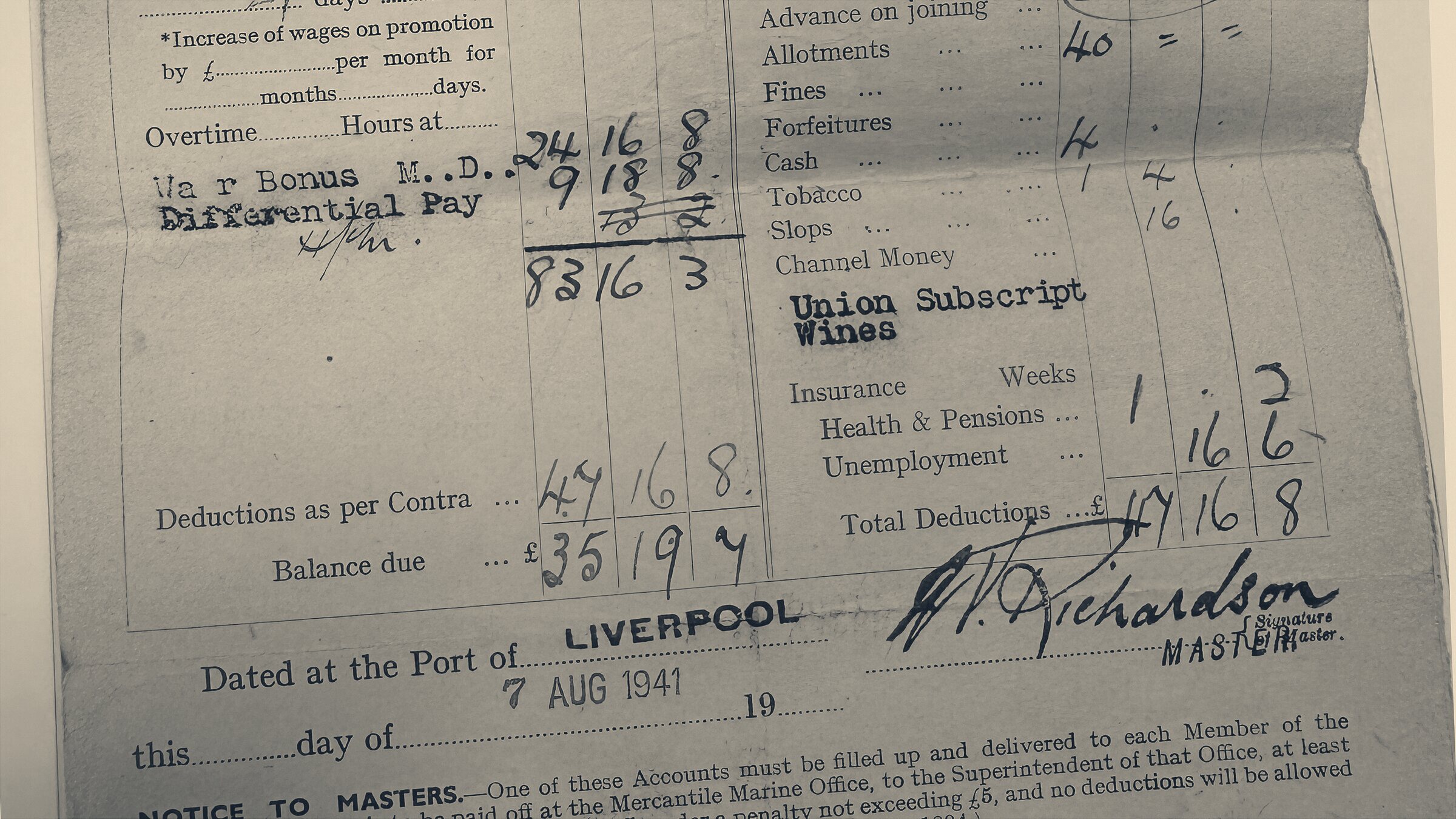
Even if your headline rate stays the same, money taken from your pay needs its own legal basis. Under Part II of the Employment Rights Act 1996, a deduction from an employee’s or worker’s wages is only lawful if statute requires it, a written contract term you have seen authorises it, or you consented in writing before the event that triggers it. Statutory deductions include tax, National Insurance and court-ordered payments. Recovery of an earlier overpayment of wages or expenses, and deductions for strike or industrial action, are also permitted.
| What happened | Usually allowed? | Check |
|---|---|---|
| Income tax, National Insurance or court-ordered deductions | Yes | The legal or court authority |
| Till shortage, breakage or training costs | Only with authority | Written term or prior written consent; retail and minimum-wage limits |
| Recovery of a genuine overpayment | Yes | Amount and dates of the overpayment |
| Unagreed “admin fee” or uniform charge | No | No written authority; uniform costs can also breach minimum wage |
| Earned contractual bonus or commission not paid | Potential claim | Scheme terms and whether the payment was due |
“Wages” includes salary, hourly and holiday pay, statutory sick and maternity pay, bonuses and commission. Expenses, loans or advances, pension and redundancy payments, and benefits in kind fall outside this particular deduction regime. An earned bonus left unpaid may itself be a deduction.
Written authority is not the end of the test. Most deductions cannot take effective pay below the National Minimum Wage. Narrow exceptions include tax and National Insurance, recovery of a genuine overpayment or loan, certain contractual liabilities for the worker’s acts, share purchases, accommodation under its offset rules and agreed voluntary training costs. A worker aged 21 or over earning £12.71 an hour for 37.5 hours gets £476.63 a week, rounded. A £30 charge for a required uniform brings minimum-wage pay to about £11.91 an hour. That is below the April 2026 floor, even with a signed deduction clause.
Retail workers have an additional limit for till shortages and stock deficiencies: no more than 10% of gross pay in one pay period. The employer must make the claim in writing and recover the sum within 12 months of discovering the shortage. The 10% cap does not apply to final pay, but the deduction still needs a legal basis. On £250 gross weekly pay, a properly authorised £50 till shortage can normally be taken as £25 over each of two paydays, not £50 at once.
Can cutting hours cut pay?
Only where the contract allows it, or you agree. The right to impose an unpaid lay-off or short-time working must be express in your contract, or established by agreement or long-standing custom and practice. Without that right, sending you home for two days a week on two days’ pay is a breach of contract and an unlawful deduction. Calling it a management decision does not make it lawful. Cutting guaranteed overtime without agreement is a pay cut. An employer who stops offering purely voluntary overtime usually has not cut your contractual pay.
Example: imposed three-day week
Amara earns £35,000 for 37.5 hours a week, about £673.08 weekly. Her employer cuts her to 22.5 hours and £403.85 without agreement or a contractual right to short-time working. She is short by about £269.23 a week, which she may be able to recover as an unlawful deduction. Over a full year the equivalent difference is £14,000. If a valid short-time clause applied, she would instead need to check whether she qualifies for guarantee pay on days she does no work.
On a qualifying workless day during a lawful lay-off or short-time arrangement, statutory guarantee pay is up to £41 a day for at most five days in any three-month period. The maximum total is £205. You need at least a month’s continuous employment. If your normal daily pay is less than £41, you get that lower amount; part-time entitlement is proportional. Four qualifying days at £41 give £164; the fifth brings the total to £205. An employer who fails to pay guarantee pay due risks an unlawful-deduction claim. Check the qualifying conditions.
After four consecutive weeks of lay-off or short-time working, or six weeks in thirteen, an employee with sufficient service may be able to claim redundancy pay. It is not automatic. You must follow the notice procedure. Check the lay-off rules before leaving.
Shift patterns, flexitime and variable hours
A new rota can change your contract even if the hourly rate stays the same. It might offer fewer hours, move nights to days or spread work unpredictably. If your hours, days or place of work are contractual, your employer cannot impose the change by announcement. The 48-hour weekly average cap under the Working Time Regulations still applies unless you have opted out in writing, and your employer cannot force you to opt out. Zero-hours exclusivity clauses have been unenforceable since 2015. These are clauses that say “you may not work for anyone else”.
Your employer can consult you and agree a trial, or rely on a clear flexibility clause for a reasonable change it actually covers. A vague clause does not make every new shift system lawful. From January 2027, dismissal for refusing certain changes to hours or qualifying shift timings is scheduled to gain automatic-unfair-dismissal protection. Regulations will determine which shift changes qualify. See the reform timetable.
Asking for flexible working yourself
If you ask for different hours, the statutory flexible-working procedure applies; it does not entitle an employer to impose a pay cut. In Great Britain, since 6 April 2024, employees can request flexible working from day one and make two statutory requests in twelve months, with only one live at a time.
- Put it in writing. State it is a statutory request, the change you want and when you want it to start. Date it. The two-month clock starts then.
- Expect consultation. Your employer must consult you before refusing. Use the meeting to negotiate hours, cover, a trial period and the effect on pay.
- Get a decision within two months. That deadline covers any appeal. Agree any extension in writing if a trial needs longer.
- If refused, check the grounds. Refusal is only lawful on one or more of the eight business reasons, and the employer should follow the Acas Code of Practice.
The eight statutory refusal grounds are additional costs; harm to customer demand, quality or performance; inability to reorganise work or recruit staff; insufficient work during the proposed hours; and planned structural changes. These grounds are not a licence for a discriminatory refusal. The separate statutory requirement that a refusal be reasonable is scheduled for 2027, not yet in force.
For the full request procedure, see Can I request flexible working?.
Pay rises and performance ratings
There is no general legal right to a pay rise. Check what your contract, a collective agreement or an incorporated pay-scale promise says. Your employer must pay a contractual annual increment, an increase guaranteed by a review clause, or a collectively bargained increase that your contract incorporates. A promised but unpaid contractual rise is a breach of contract and a potential deduction claim, just like a cut.
“We will review pay annually” promises a review, not an increase. An employer can usually withhold a discretionary rise after an appraisal, but cannot ignore a contractual promise or discriminate. If disability-related absence affects a rating, ask whether your employer made reasonable adjustments. If maternity leave reduces a rise, ask how your employer treated the period away. Applying the same rating system to everyone can still produce unlawful outcomes.
Get the pay-scale terms and appraisal criteria, then compare the awards. If a comparable full-time colleague gets a rise and a part-time worker does not, the employer needs an objective justification for the difference under the part-time worker rules. Performance criteria are not exempt from scrutiny.
Bonuses: contractual, discretionary or habit?
No statute requires an employer to offer a bonus. Once one exists, the scheme wording and payment history determine what you can enforce. Tribunals look past the label “discretionary”.
When a contractual scheme’s conditions are met, an unpaid bonus can be a deduction from wages. An employer must exercise genuine discretion honestly and rationally, not arbitrarily or discriminatorily. The word “discretionary” does not remove those duties. Repeated, unconditional payments may support an argument that a bonus has become contractual through custom and practice. A five-year history alone does not prove it.
A part-time worker should generally get a pro-rata bonus on comparable terms unless a difference is objectively justified. Half the hours might mean £250 instead of a £500 full-time award. Fixed-term workers also have equal-treatment protection. Maternity bonus rules depend on what the payment rewards. An employer cannot simply withhold a bonus for time actually worked or for the compulsory maternity-leave period because of leave. Treatment of the rest of maternity leave depends on the scheme and the nature of the payment. See Acas on bonuses during leave, equal pay and part-time rights.
Before accepting “discretionary” as the answer, read the bonus rules and look at how your employer made past awards.
If a cut is imposed: your options
Keep the contract, payslips and written objections. A linked series of unlawful deductions can reach back up to two years, but the usual Great Britain tribunal deadline is six months less one day from the last deduction for claims under the rules in force from 1 October 2026. A single short payment has its own clock. Check the deadline for your particular claim and start Acas early conciliation in time; it affects the calculation. A grievance does not stop time running. Government commencement timetable.
- Object in writing. Explain that you are working under protest and do not accept the new rate. Repeat your objection when the shortfall appears; keep copies.
- Raise the problem and seek conciliation. Ask for the contractual basis and calculation, then use the grievance process if needed. Notify Acas before the tribunal deadline; a grievance alone does not extend it.
- Get advice before resigning. A serious breach may support constructive dismissal, but eligibility and timing depend on the facts. Do not resign just to test the point.
- Choose the right claim. Workers and employees can claim unlawful deductions. Discrimination and equal-pay claims have distinct tests. An employment-tribunal breach-of-contract claim generally requires employment to have ended; a live contract dispute may instead go to the county court, or sheriff court in Scotland. How to bring a tribunal claim.
Use the route that fits the problem. Report minimum-wage underpayment or deductions that pull pay below the legal floor to HMRC’s pay and work rights complaint service. If there is trafficking, forced labour or serious labour exploitation, contact the GLAA. If the dispute involves unsafe work, report the safety risk to the HSE; if it involves discrimination, use the Equality Advisory and Support Service and seek advice. A union can act with you: Unite for hospitality, logistics and cleaning; USDAW for retail; UNISON or GMB for care and health; IWGB for many delivery workers. Acas early conciliation, Citizens Advice and a local law centre can help you choose the claim. These routes do different jobs; a complaint to HMRC or a regulator does not extend a tribunal deadline.
Who is protected, and where
Employee
- Unlawful-deduction protection
- Ordinary and constructive unfair-dismissal rights, subject to service rules
- Statutory flexible-working request
- Written particulars, redundancy and qualifying guarantee pay
- Scheduled restricted-variation dismissal protection from January 2027
Worker
- Deduction, minimum-wage and holiday-pay protection
- No ordinary unfair-dismissal, redundancy or statutory flexible-working-request rights
- Possible contract and discrimination remedies, depending on the relationship
Genuinely self-employed contractors do not have the Employment Rights Act deduction claim. Their main route is contract law. Some who personally perform work may also have discrimination protection. Agency workers commonly have worker rights, including minimum wage and deduction protection, but status depends on the arrangement. After twelve qualifying weeks in the same role with the same hirer, agency workers have equal basic working and employment conditions, including pay, subject to the regulations. They are excluded from the statutory flexible-working request.
Unsure of your status? See employee, worker or self-employed? Scotland generally follows the Great Britain rules, but ordinary court contract claims usually go to the sheriff court, where a five-year prescriptive period may apply. The new six-month tribunal period for Scottish employment-contract claims begins on 9 November 2026. Northern Ireland has separate employment legislation and generally a three-month tribunal deadline; check its rules before relying on the Great Britain timetable.
What is changing
- Employment Rights Act 2025 receives Royal Assent
The Act passed, but its provisions take effect in stages.
- Sick pay and protective awards: in force
Statutory Sick Pay is payable from the first qualifying sick day at up to £123.25 weekly or 80% of average weekly earnings, whichever is lower; the lower earnings limit is removed. The maximum collective-redundancy protective award doubled from 90 to 180 days’ pay.
- Most tribunal claim limits: in force
The Great Britain limit generally rises from three to six months. Scottish employment-contract tribunal claims change on 9 November 2026; check the precise last day for each claim.
- Unfair dismissal and fire-and-rehire: scheduled
For dismissals from 1 January 2027, the ordinary unfair-dismissal qualifying period is due to fall to six months and the compensatory award cap to go. Restricted-variation and replacement-with-contractors dismissal protections are also planned for January.
- Further changes: scheduled
Stronger flexible-working refusal rules, guaranteed-hours and short-notice payment rights, maternity-dismissal protections and umbrella-company regulation are planned; commencement dates remain to be set.
For now, dismissal and re-engagement is subject to existing unfair-dismissal law and the statutory Code of Practice in force since 18 July 2024. An unreasonable failure to comply can change a relevant tribunal award by up to 25%. If an employer proposes 20 or more dismissals at one establishment within 90 days to change terms, collective consultation may also apply. Dismissed for refusing new terms? Check unfair dismissal and contract claims promptly; these are not interchangeable.
Questions people ask
Can my employer cut my pay without telling me?
A cut does not become lawful just because it appears on a payslip. Check your contract, any collective agreement and the reason given. Your employer must notify you in writing within a month of changes to written particulars. Deductions must also be shown on the payslip.
My hours were cut, so my pay fell. Is that lawful?
Your employer’s say-so is not enough. Look for your agreement, a valid lay-off or short-time clause, or a binding custom. Guarantee pay may be due for qualifying days with no work under a lawful arrangement.
Can a poor appraisal cost me a bonus?
It can if the scheme gives genuine discretion. Check whether you had already met contractual targets and whether the appraisal treated protected absences or characteristics unlawfully.
They have paid a Christmas bonus for five years. Can they stop?
They may be able to. A consistent, unconditional pattern may help show a contractual entitlement. Check the scheme wording, what your employer told you and how it decided past awards.
Must I accept lower pay to get flexible hours?
No automatic rule requires that trade-off. If you agree fewer paid hours, record whether your hourly rate stays the same. Cash pay must still meet minimum wage; you can still challenge discriminatory terms.
When must I challenge an underpayment?
In Great Britain, the usual tribunal limit for a deduction is six months less one day from the deduction, or the last in a linked series, under the October 2026 rules. Claims in a series are generally capped at two years’ arrears. Northern Ireland has separate, generally three-month limits. Start conciliation early.
Sources
- Employment Rights Act 1996, legislation.gov.uk
- Employment Rights Act 2025, legislation.gov.uk
- Plan to Make Work Pay: implementation timeline, gov.uk
- National Minimum Wage and National Living Wage rates, gov.uk
- Statutory Sick Pay: overview, gov.uk
- Guarantee pay, gov.uk
- Deductions from pay and wages, Acas
- If your employer introduces a contract change without your agreement, Acas
- Bonuses, Acas
- Statutory flexible working requests: the right to request, Acas
- Dismissal and re-engagement: code of practice, gov.uk
- Flexible working and work-life balance, nidirect
- Pay deductions, nidirect
- National Living Wage and National Minimum Wage: enforcement and compliance evidence 2024, DBT and HMRC
- The experience of insecure work, TUC
- Pay and work rights complaints, gov.uk
- Gangmasters and Labour Abuse Authority, gov.uk
- Raise a health and safety concern, HSE
- Equality Advisory and Support Service