Working alone or in remote locations: safety rights
Working alone is usually legal. Leaving you without a workable safety plan is not. Here is what to ask for, when you can leave danger and where to get help.
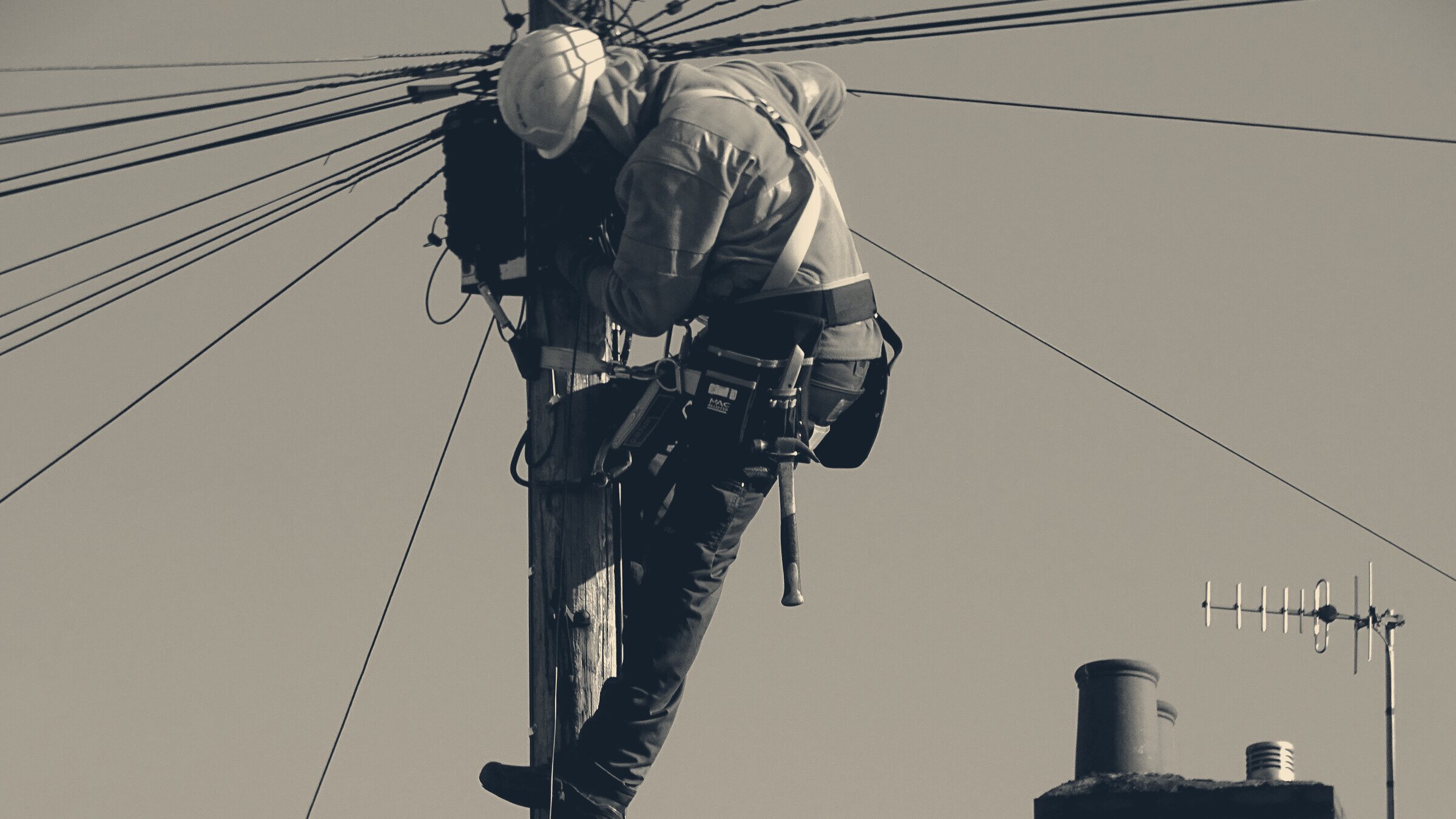
If you are hurt on a solo care visit, who notices? If your phone loses signal on a farm, who comes looking? Those questions belong to your employer before the shift starts. Being the only cleaner, guard or shop assistant on duty does not mean you have to organise your own rescue.
- 5+
- employees. Significant risk-assessment findings must be recorded.
- Free kit
- employees cannot be charged for legally required safety provision
- 6 mths
- minus one day, most claims arising from 1 October 2026
What counts as lone or remote working
The Health and Safety Executive’s definition is someone working “by themselves without close or direct supervision”. You can be a lone worker in a busy town or surrounded by customers. The issue is whether you have support, not whether the postcode looks rural.
Delivery drivers, domiciliary carers, cleaners, petrol station staff, security guards and homeworkers can all be lone workers. Remote locations add problems of their own, including poor signal, difficult access and a longer wait for help. There is no general distance-from-help threshold in the lone-working rules.
There is no dedicated Lone Working Act. In Great Britain, section 2 of the Health and Safety at Work etc. Act 1974 requires employers to protect employees’ health, safety and welfare “so far as is reasonably practicable”. Section 3 covers risks to other people affected by the business, including contractors. Regulation 3 of the Management of Health and Safety at Work Regulations 1999 requires a “suitable and sufficient” risk assessment. Lone work must be part of it. The Northern Ireland equivalents are below.
Can you be made to work alone
Usually, yes. There is no general right to insist on a colleague beside you. But an employer must manage the risks before sending you out alone. A staffing shortage does not remove that duty.
HSE identifies certain high-risk work that requires at least one other person. These are examples, not a complete statutory checklist:
| Work | What to check before starting |
|---|---|
| Confined-space work | The safe system of work and rescue arrangements. HSE says a supervisor may need to be present, with someone in a rescue role. |
| Work near exposed live electricity conductors | The specialist electrical safety arrangements and required assistance. |
| Diving operations | The required diving team and support arrangements. |
| Work in vehicles carrying explosives | The crew and other safety requirements for the operation. |
| Fumigation work | The required assistance and emergency arrangements. |
Do not start high-risk work without the assistance its safe system requires. Nor does being outside this list prove a task is safe alone. A care visit to a client with a known history of violence may need two staff. See what your employer must do about workplace risks.
The lone-worker risk assessment: what it must cover
Your employer must assess risks to you and to others affected by the work, act on the findings and review the assessment when it may no longer be valid or there has been a significant change. If it employs five or more people, it must record the significant findings. A smaller employer still has to assess and control the risks.
Ask how the assessment deals with the actual job:
- Violence, threats or harassment from clients, patients, customers or the public.
- Your ability to do the task alone, including relevant health conditions, experience and training.
- Stress, fatigue, workload and the physical demands of the work.
- Signal blackspots, roads, weather, lighting, access, exits and distance from help.
- What happens if you are injured or taken ill and cannot raise the alarm.
Under regulation 13, your employer must consider your health and safety capabilities when allocating work. It must provide adequate training when you join and when new or changed risks require it. You also need training in the emergency procedures. If you visit another employer’s workplace, your employer must ask that business about risks and controls. A client’s private home still needs assessment; it is not a safety-law exemption.
Contact and emergency arrangements that must exist
HSE says employers must monitor lone workers and keep in touch. Its examples include supervisor visits, pre-agreed contact intervals, manual or automatic alarms and a reliable way to confirm you have returned to base. The mix must fit the risk. Systems and emergency procedures must be tested regularly.
Before the shift, you should be able to answer these questions:
- Agree when contact is due. Set check-ins by time or task, with a way to report delays.
- Name the person who responds. They need your location or route and must be available throughout the work, including nights and weekends.
- Set the missed-contact procedure. It must say when to try again, how to check your safety and when to send help. An unread message in a group chat is not a response.
- Plan for failed communications. Check coverage, batteries and backup equipment. Emergency services need enough location and access information to reach you.
Example: a missed check-in on a care visit
A 45-minute visit is due to finish at 19:00. In this illustrative plan, the supervisor calls at 19:15 if the carer has not checked in. At 19:20, they try again and check the visit information. By 19:30, if the carer’s safety is still unknown, they arrange help under the emergency procedure.
These are example timings, not legal limits or a safe waiting period for every job. An alarm, a threat or evidence of injury needs an immediate response. The assessment may require much earlier action. Calling a client is not appropriate if that client may be the source of danger.
First aid belongs in the same plan. The Health and Safety (First-Aid) Regulations 1981 require adequate equipment, facilities and personnel for employees, according to the circumstances. Remote work may need a personal or vehicle kit and first aid training. Plan how help will reach the site, rather than assuming a phone call solves access problems.
Report injuries, threats, near misses and equipment faults through your workplace procedure. RIDDOR covers specified reportable events, not every near miss. These include work-related deaths, specified injuries, over-seven-day incapacitation and listed dangerous occurrences. The employer or other responsible person normally makes the statutory report. See how to report an injury at work.
What your employer must give you, free
The equipment depends on the assessment. It may include a suitable phone or radio, an alarm, a personal first aid kit, lighting, protective clothing and footwear, maps and route information. A satellite device may be needed where ordinary communications cannot work. There is no universal duty to buy a particular app or gadget. The duty is to make the work safe.
For employees, section 9 of the 1974 Act prohibits charges for anything done or provided to meet a specific legal health and safety requirement. That includes a lone-worker device required to meet those duties. A £10 monthly charge costs £120 over a year. Ask for it to stop and for reimbursement, and keep the payslips. Whether you also have an unlawful wage-deduction claim depends on the deduction and your employment status; get advice rather than assuming every deduction follows the same route.
Most adult workers are entitled to an uninterrupted 20-minute rest break when their working day exceeds six hours. A 10-hour rural shift does not remove that right. Some jobs have exceptions or separate rules, including transport work; compensatory rest may apply. Night work has additional limits. See rest breaks at work and shift work and fatigue. Lone staffing must not become a reason to ignore the rules.
Use safety equipment as trained, follow the agreed contact procedure and report faults or changing risks. Your own duty to take reasonable care does not transfer your employer’s duty to you.
Violence and harassment when no one is beside you
A carer in a client’s home, a guard on an isolated site and a petrol station worker handling cash face different risks. Your employer must assess them and choose effective controls. Those may include paired visits, different staffing, safer appointment times, alarms, training, escape routes and rules for known dangerous addresses. An alarm alone cannot make every assignment safe.
In Great Britain, the duty to take reasonable steps to prevent sexual harassment has applied since 26 October 2024. It matters when the risk comes from a customer or client as well as a colleague. As at 1 October 2026, that is the current duty. Acas confirms the stronger “all reasonable steps” duty is scheduled for 30 October 2026. The government’s timetable also schedules a duty not to permit third-party harassment for that date. These are not yet the rules in force at this guide’s legal cut-off.
Read violence at work and sexual harassment at work. Speak to your union rep about dangerous solo assignments. Usdaw represents retail workers, UNISON care and health staff, and Unite and GMB organise across sectors including security, logistics and hospitality. You can join a union even if your workplace does not recognise it.
Can you refuse to work alone
In Great Britain, section 44 of the Employment Rights Act 1996 protects workers against detriment for leaving, proposing to leave or refusing to return while danger persists, if they reasonably believe the danger is serious and imminent and cannot reasonably be expected to avert it. This protection has covered workers as well as employees since 31 May 2021. A loss of shifts can be a detriment.
Section 100 makes an employee’s dismissal on the corresponding health and safety ground automatically unfair, with no minimum service requirement. This is not a blanket right to refuse all lone work. A faulty panic alarm, a known violent client and no backup are relevant facts, not a guarantee that a claim will succeed.
- Get to safety. Do not delay leaving danger to collect evidence or obtain permission. Call 999 if emergency help is needed.
- Tell the supervisor as soon as it is safe. Explain the danger, where you are and why you believe you cannot safely continue alone. Ask for a safe alternative, such as a paired visit.
- Keep a dated account. Record the assignment, failed controls, what you reported and the response. Save messages, rotas and payslips if shifts or pay are cut afterwards. Do not put yourself at risk to take photographs.
- Get advice without resigning in haste. Contact your union, Acas, Citizens Advice or a law centre. The reason for the employer’s treatment and your legal status matter.
Agency, zero-hours, self-employed, home and night shop work
Employees have safety protection, section 44 detriment protection and the section 100 dismissal route. Workers who are not employees, including some casual and gig workers, have section 44 danger-related detriment protection but not unfair dismissal rights. A zero-hours contract does not by itself decide your status. Keep evidence of what changed after you raised the risk.
For agency work, the agency and host business must coordinate safety responsibilities. Tell both about missing equipment, unsafe solo assignments or a failed check-in system. The Fair Work Agency, established on 7 April 2026, is the employment-agency enforcement route, not a replacement for HSE or the council on workplace safety. See agency workers’ rights.
The engaging business also owes safety duties to self-employed contractors affected by its work. HSE says lone-work risk management applies to “anyone contracted to work for you, including self-employed people”. Do not assume that gives a genuinely self-employed person section 44 or unfair dismissal rights. Check whether you are an employee, worker or self-employed.
Homeworking does not remove your employer’s safety responsibilities. The controls should fit the job, including isolation, workload and equipment. Travel between care visits and solo night-shop work also need assessment. See driving for work, home and hybrid working and farm workers’ safety protections for those settings.
Scotland and Northern Ireland
Scotland shares the core Great Britain safety and employment protections described above. HSE and local authorities enforce workplace safety, with criminal prosecutions brought through the Procurator Fiscal. Since 24 August 2021, the Protection of Workers (Retail and Age-restricted Goods and Services) (Scotland) Act 2021 has made assaulting, threatening or abusing retail workers a specific offence, with an aggravation linked to enforcing age restrictions.
Northern Ireland uses the Health and Safety at Work (Northern Ireland) Order 1978 and the Management of Health and Safety at Work Regulations (Northern Ireland) 2000. HSENI confirms lone working is legal if employers assess risks and introduce suitable controls. Local councils also have enforcement responsibilities.
The GB sections 44 and 100 do not apply directly in Northern Ireland, but that does not leave you without protection. Article 68 of the Employment Rights (Northern Ireland) Order 1996 protects workers against detriment for leaving or proposing to leave danger they reasonably believe is serious and imminent and cannot reasonably be expected to avert, or refusing to return while it persists. Contact the Labour Relations Agency, your union or an NI law centre about dismissal and local claim deadlines. Do not import the GB reform dates into an NI claim.
What to look for in a written lone-working policy
A policy should tell you how the arrangements work, not promise that safety is a priority. Look for the tasks that need backup, who covers check-ins, what happens after missed contact, equipment and maintenance, emergency access, first aid, training, violence controls and a way to report faults. It should say how to get replacement safety equipment outside office hours. There is no universal requirement for a separate document called a lone-working policy; the assessment and arrangements matter.
Your employer must consult employees about health and safety. That means recognised-union safety representatives where applicable, or consultation directly with employees or through elected representatives under the relevant rules. It does not always require a union or an elected rep. Ask who was consulted and raise gaps with your safety rep. See how staff can raise safety concerns.
Who to report to, and what happens next
Raise the problem with your supervisor and safety or union rep if it is safe to do so. A written report helps identify the assignment, location, danger, missing controls and what you want changed. If it remains unresolved, report it to the enforcing authority. Shops and hospitality premises are commonly council-enforced; HSE covers many other sectors. Care settings need the correct authority for the activity. In Northern Ireland, use HSENI or the relevant council.
HSE and councils can inspect, issue improvement or prohibition notices and prosecute. HSE’s Fee for Intervention can apply when it identifies a material breach; it is not a council charge. An inspection or complaint does not itself compensate you for lost shifts. Detriment and dismissal claims use the employment-law route.
Example: the employer’s inspection bill
If a material breach falls within HSE’s Fee for Intervention scheme and HSE spends six chargeable hours dealing with it, the bill at £188 an hour is £1,128. That rate applies from 1 April 2026. This is an illustrative calculation, not a fixed fine for a missing check-in system.
For an assault, threat or stalking, contact police. Call 999 in an emergency, or 101 for a non-emergency report. Keep any reference number. For lost pay, punishment or dismissal after raising danger, speak to your union and Acas in Great Britain, or the Labour Relations Agency in Northern Ireland. Citizens Advice and law centres can help with finding advice. Use our HSE enforcement guide to understand the safety route.
What is in force and what is scheduled
These Great Britain dates are checked against the government’s updated implementation timetable. They do not create a new general ban on lone working.
- In force: sexual harassment prevention
The reasonable-steps duty applies.
- In force: Fair Work Agency established
Employment-agency enforcement is relevant to agency staff. Workplace safety remains with the safety regulators.
- In force: longer tribunal limits for new problems
Most claims arising on or after this date have six months less one day. Earlier problems retain their previous limits. Scottish tribunal breach-of-contract claims change later, on 9 November 2026.
- Scheduled: stronger harassment duties
The “all reasonable steps” sexual harassment duty and the third-party harassment duty are scheduled for this date. They are not yet in force as at 1 October 2026.
Questions people ask
What counts as a remote area for lone-working rights?
There is no general mileage threshold. The definition turns on working without close or direct supervision. Poor signal, access and distance from help still matter to the assessment.
Can you be made to work alone at night in a shop?
Usually, yes, if the risks are properly assessed and controlled. Staffing, violence, robbery, contact and emergency arrangements all matter. No single alarm or staffing level suits every shop.
Can your employer charge you for a lone-worker app?
An employee cannot be charged for provision required to meet a specific legal safety duty under section 9 of the 1974 Act. Ask for reimbursement and keep the deduction evidence. Non-employees should get advice on status and the relevant equipment or pay rules.
Can you be sacked for leaving a dangerous solo assignment?
In Great Britain, an employee’s dismissal on the qualifying danger-related ground can be automatically unfair under section 100, with no minimum service. Workers also have section 44 detriment protection. Your reasonable belief and the employer’s reason for its action matter. Northern Ireland uses separate law.
Do safety duties still apply when you work from home?
Yes. HSE says employers have the same safety responsibilities for homeworkers. The controls should fit the work, so an office job at home does not need the same emergency system as an isolated farm task.
Who can help you challenge unsafe lone work?
Your safety rep or union can help. Unresolved risks go to HSE or the council in Great Britain, or HSENI or the council in Northern Ireland. Acas or the Labour Relations Agency advises on employment disputes. In an emergency, get to safety and call 999.
Sources
- Lone working: protect those working alone, HSE.
- Manage the risks of working alone, HSE.
- Training, supervision and monitoring, HSE.
- Stress, first aid and emergencies for lone workers, HSE.
- Health and Safety at Work etc. Act 1974, especially sections 2, 3, 7 and 9, legislation.gov.uk.
- Management of Health and Safety at Work Regulations 1999, especially regulations 3, 8 and 13, legislation.gov.uk.
- Health and Safety (First-Aid) Regulations 1981, legislation.gov.uk.
- Reporting of Injuries, Diseases and Dangerous Occurrences Regulations 2013, legislation.gov.uk.
- Working Time Regulations 1998, regulation 12, legislation.gov.uk.
- Employment Rights Act 1996, section 44, legislation.gov.uk.
- Employment Rights Act 1996, section 100, legislation.gov.uk.
- Employment Rights Act 1996 (Protection from Detriment in Health and Safety Cases) (Amendment) Order 2021, legislation.gov.uk.
- Employment tribunal time limits, Acas, updated 1 October 2026. Includes transitional limits and early conciliation.
- Sexual harassment law changes, Acas.
- Worker Protection (Amendment of Equality Act 2010) Act 2023, legislation.gov.uk.
- Plan to Make Work Pay and Employment Rights Act: timeline update, GOV.UK, updated 25 September 2026.
- Fair Work Agency, GOV.UK.
- Violence at work statistics 2024/25, HSE, based on the Crime Survey for England and Wales. Source for the violence reality check.
- HSE Annual Report and Accounts 2024 to 2025, GOV.UK. Source for the enforcement reality check.
- Fee for Intervention rates, HSE, rate effective 1 April 2026.
- Safety Representatives and Safety Committees Regulations 1977, legislation.gov.uk.
- Health and Safety (Consultation with Employees) Regulations 1996, legislation.gov.uk.
- Lone working, HSENI.
- Health and Safety at Work (Northern Ireland) Order 1978, legislation.gov.uk.
- Management of Health and Safety at Work Regulations (Northern Ireland) 2000, legislation.gov.uk.
- Employment Rights (Northern Ireland) Order 1996, article 68, legislation.gov.uk.
- Protection of Workers (Retail and Age-restricted Goods and Services) (Scotland) Act 2021, legislation.gov.uk.